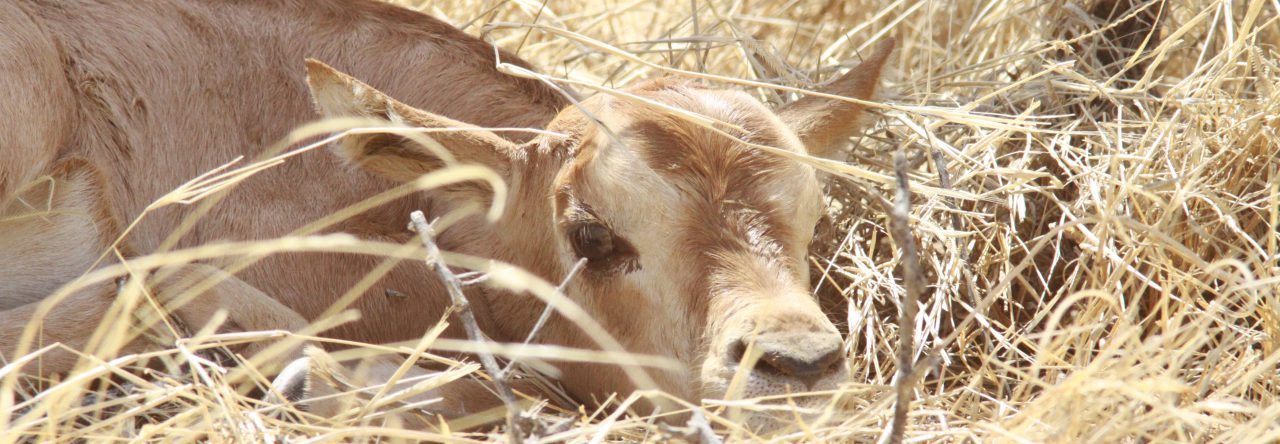
Angolan giraffe (Giraffa giraffa angolensis) are a subspecies of southern giraffe that are listed by the IUCN Red List as a species of Least Concern. Angolan giraffe populations, however, were decimiated during the liberation struggle and civil war in Angola that ended in the early 2000s.
In 2022, I traveled with a team from the Giraffe Conservation Foundation (GCF) and African Parks to Iona National Park in Angola. The goal of the mission was to evaluate habitat across Iona NP for potential giraffe reintroduction efforts aimed to repopulate areas where Angolan giraffe once persisted.

After multiple days of driving across extremely dry areas in Angola, we arrived in Iona. Habitat was visually similar to habitat in northern Namibia where populations of Angolan giraffe were thriving. In 2023, the GCF team began reintroducing Angolan giraffe to Iona National Park with African Parks and Angolan government authorities.

Today, we published an article in Restoration Ecology that predicts the quality and extent of suitable habitat for Angolan giraffe across Iona National Park. The model was parameterized using giraffe occurrence data from Namibia and validated with GPS tracking data from the translocated giraffe. Our framework includes a coded workflow that others can use to evaluate habitat suitability in potential translocation areas for their own target species. This study underscores the value of leveraging data to proactively identify suitable habitat prior to initiating animal translocations, activities which can be challenging and prohibitively expensive.
Congratulations to Ramiro Crego and team for pushing these efforts forward. I’m thrilled to be involved. Congrats also to the Giraffe Conservation Foundation for being a small organization with BIG impact.
The paper can be founder here as an open access article at Restoration Ecology (https://onlinelibrary.wiley.com/doi/10.1111/rec.70243), inclusive of code to recreate the analysis.
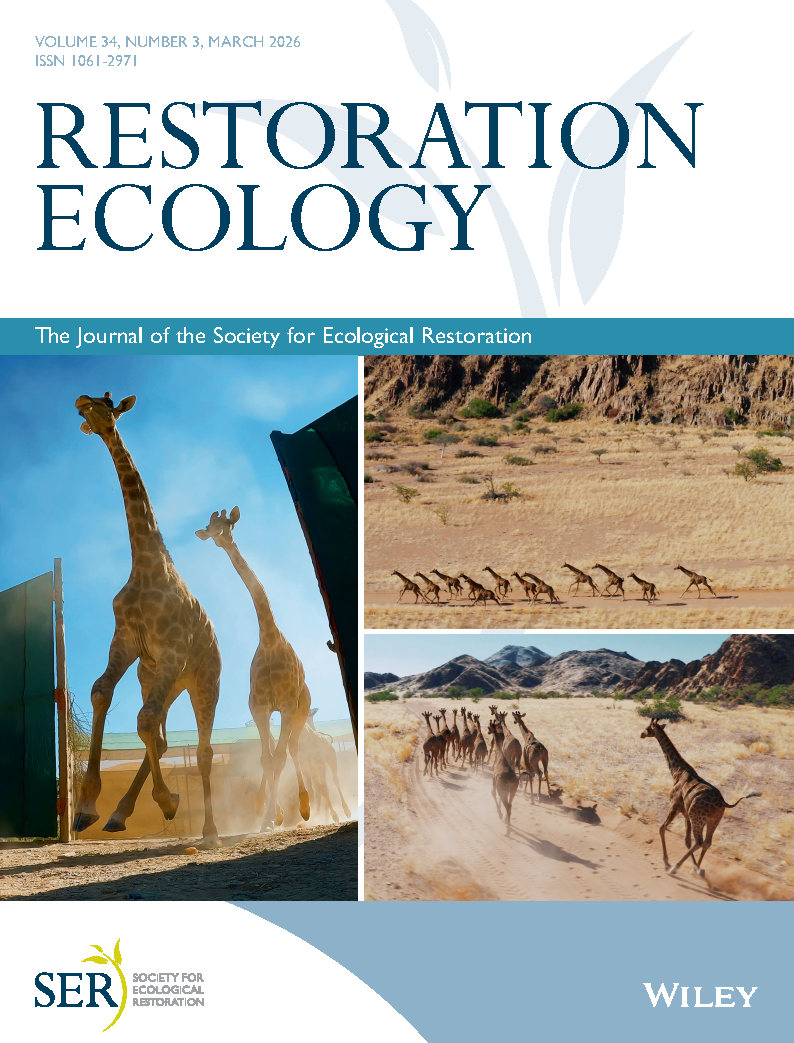
And, oh yeah – I forgot, we were also selected as the front cover article for this journal, seen here.
 Jared A. Stabach
Thanks for sending this article, Jared. Very fascinating. I can barely imagine what it must be like to spend time in Iona National Park which doesn’t seem to have a very friendly environment. But the data was be there in favor of reintroduction of these majestic creatures. Amazing work!
Think of you more often than you know. Keep up the good work you do for all of us.
Love, Maureen
>
LikeLike
A tough environment indeed. Most areas in the Namib receive less than 3 inches of rainfall annually; some less than 0.10 inches. It’s amazing that anything can survive there. It’s where you can find Welwitchia mirabilis, one of the strangest plants I’ve ever seen. The old saying “Nature finds a way” is so very relevant here. Recovery, however, is slow, requiring patience and long-term collaboration.
LikeLike