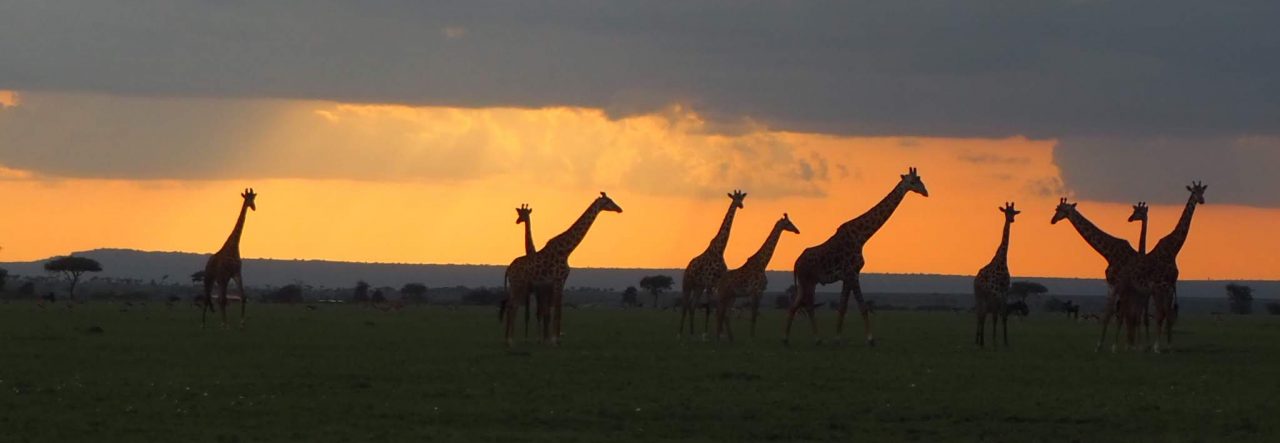
Across ecosystems globally, my research is intently focused on providing practical recommendations with partners to maximize conservation outcomes. Nowhere is this more relevant than in the Greater Mara Ecosystem in Kenya, where fencing has dramatically altered the landscape and negatively impacted the ability of wildlife (and pastoralists) to move and access seasonally variable resources.
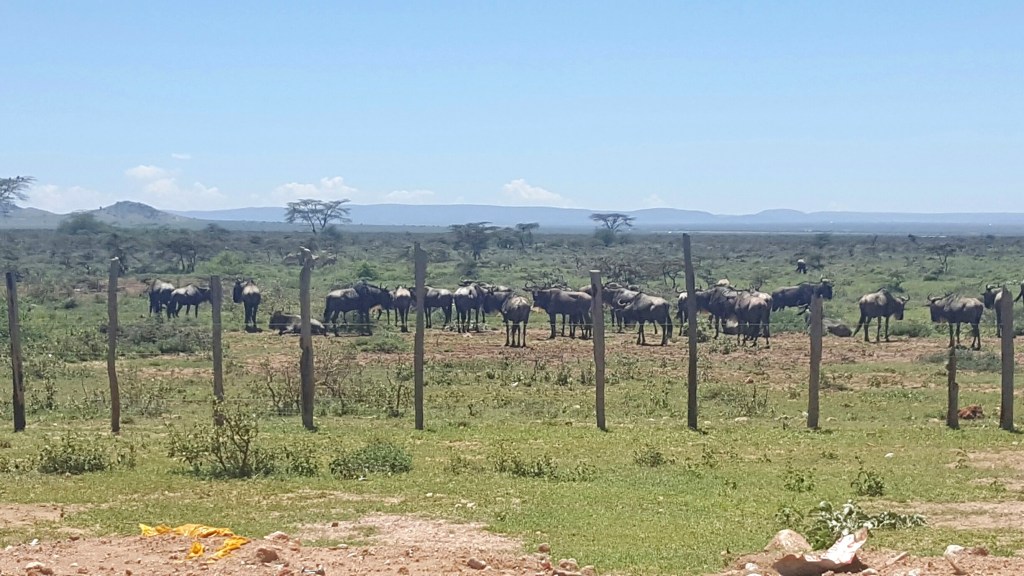
In 2024, we published a manuscript in Ecological Applications – Predicting the Impact of Targeted Fence Removal on Connectivity in a Migratory Ecosystem. Our analysis, led by PhD student Imogen Schwandner at Humbodlt University in Berlin (formerly a MS student at the University of Glasgow), recognizes that we are unlikely to be able to conserve every piece of land for conservation. Quite simply, there are far too many competing interests and far too little funding to do so. As a result, analyses that target areas that have the greatest conservation impact are incredibly useful, providing information to local decision makers on where to allocate limited resources.
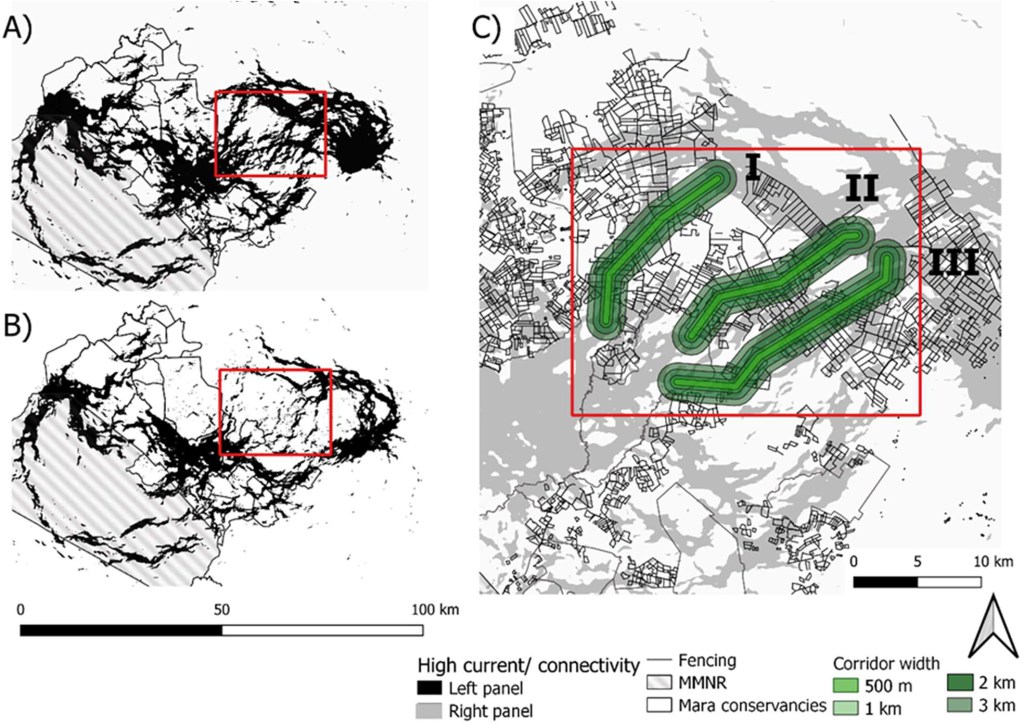
Our analyses compares historic wildebeest movements (2010-2013) with those of contemporary (2017-2021) wildebeest. We overlaid mapped fences across the ecosystem, creating a database of landscape features (called Landscape Dynamics), so that different scenarios can be quantitatively evaluated. Our results show that Corridor I could lead to >40% improvement in connectivity, with costs that are equal to or better than the establishment of corridors in other areas.
 Jared A. Stabach
Good info. Thank you. Anita
Get Outlook for Androidhttps://aka.ms/AAb9ysg
LikeLike