
Kenya once supported more than 20,000 rhinoceros, but rampant poaching in the 1970s and 1980s decimated populations. By 1982, numbers had plummeted by 98%, leaving fewer than 400 individuals. Thanks to decades of dedicated conservation, the population has steadily rebounded to over 1,000 rhinos today.
Tragically, the northern white rhinoceros is now functionally extinct, with only two surviving females—Najin and Fatu. Kenya’s rhino population today consists of black rhinoceros (the smaller of the two species) and southern white rhinoceros translocated from southern Africa.
To secure the future of these iconic animals, the Government of Kenya is partnering with landowners to expand rhino habitat. This initiative represents a turning point: restoring rhinos to landscapes where they have been absent for more than 50 years, removing fences, strengthening security, and developing a scientific strategy for long-term monitoring so they can once again roam freely.
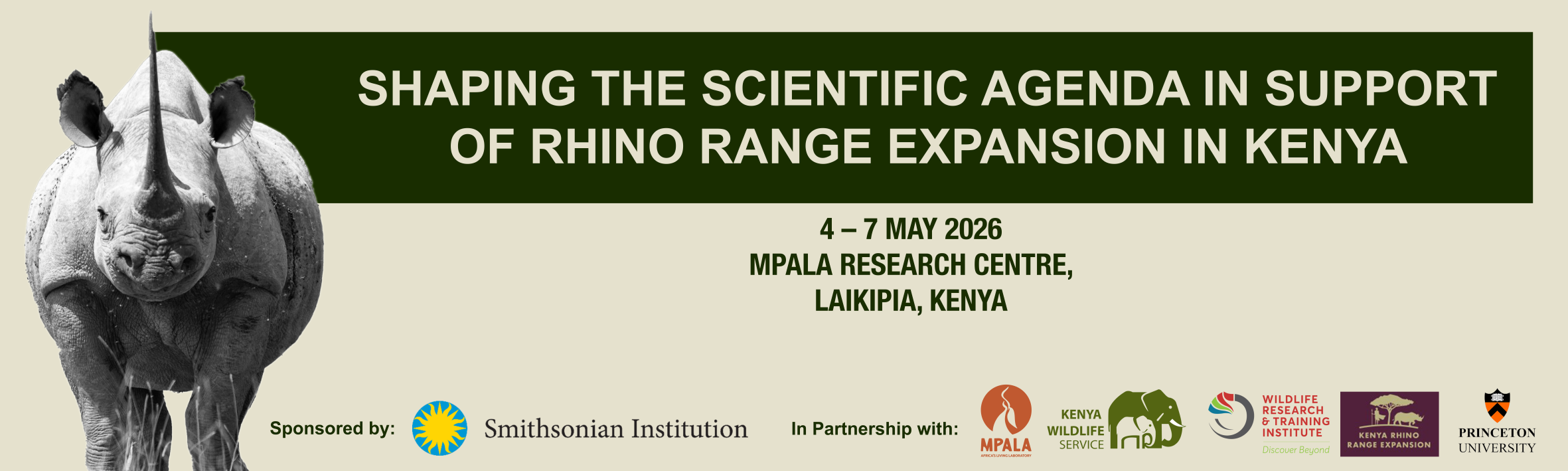
In May, I had the privilege of helping organize and attend a pivotal meeting at the Mpala Research Centre in Laikipia County with F. Vitali and others. Local and international experts gathered to shape the scientific agenda for rhino range expansion. The meeting was honored by the presence of Dr. Erustus Kanga, Director General of the Kenya Wildlife Service, with virtual remarks from Dr. Patrick Omondi, Director/CEO of Kenya’s Wildlife Research & Training Institute.
This collaborative effort marks an important step toward ensuring that future generations will inherit a Kenya where rhinos thrive once again. Rhino, however, face many challenges, with poaching that continues to decimate populations across many parts of their range.
 Jared A. Stabach
Beautifully written rhino update . Most encouraging
LikeLiked by 1 person
Hi Jared,
Great to hear from you! Thank you for this I’m looking forward to reading it.
My son and I participated in a Black Rhino conservation project the late 1990’s in Hwange National Park in Zimbabwe. Small groups of us (5) walked transit lines (5 to 18 km as I recall) thru the park. We carried photo gear (and other instruments looking for rhino footprints, photographed them from a common height, and later loaded them into a computer. Footprints ID’ed the Rhino previous prints, showing their travel patterns thru the park over time. We hoped to find baby Black Rhino footprints indicating numbers increasing. There were 4 or 5 groups that went out each day, Over the 10 days, my son and I were on groups that found footprints of 2 baby footprints and with each, there was a big celebration back at camp.
On treks, we were led by a well armed army member, in the event we came upon poachers. (Never did) We were charged by a protective mother elephant when we surprised her and her calf when coming out of a tree/brush area. Our mission was primarily determining Black Rhino population changes. In exchange for this research privilege in the park, we counted and plotted all wild animals sightings, which he used to estimate animal populations in the park.
I’m in town working on preparing my home here for the rental market, as I’m spending more time in Key West these days, and can stay with the kids when visiting. Wow, each opened box is a time travel to a previous life, bringing smiles and some sadness too. All in all, very positive with some “separation” anxietyes when throwing out or donating.
Hope all is well with you, and you’re getting lots of research time in the field!
Best, Bruce
>
LikeLike
Thanks Bruce. Sounds like a great trip to Zim. I’m back to Kenya at the end of August for NASA-related activities in the Mara. Lot’s of positive things happening in the midst of the changes and challenges that exist. Most important is that local people are more aware than ever about the treasures that they have and how special the landscape is and what it supports. Ultimately, this local knowledge and support is what will save it.
j
LikeLike