Dominant grazers

Often described as a cross between the body of an antelope, the tail of a horse, and the head of a buffalo, wildebeest are vastly important to ecosystem diversity. Since the 1960s, the population of migratory wildebeest across the Serengeti has remained relatively stable (~1.3 million individuals) after recovery from rinderpest (“cattle plague”).  At the same time, other “non-migratory” individuals, like those across the Mara and Loita Plains have declined precipitously.  In some areas, as much as 98%.  The concern from ecologists globally is the long-term sustainability of these populations.  I continue to track individuals in these populations with partners to better understand how they’re responding to rapid changes and hopefully, provide scientifically-based information to make informed decisions.

OLYMPUS DIGITAL CAMERA
Wildebeest grazing across the Mara ecosystem

Reports from researchers indicate that the historic migration has been disrupted this year.  It’s unclear why, but potential factors include fires in Tanzania or shifts in resources, which can make migration non-advantageous.  The attached picture shows members of the population that did migrate, grazing across the Mara Plains in the Olare Orok Conservancy.  Go “Beests”!

Greater Mara Ecosystem

OLYMPUS DIGITAL CAMERA
This magnificent male leopard (“Chui” in Swahili) allowed us to visit with him for a few hours.

Just back from a few important meetings in the Greater Mara ecosystem.  We’re discussing ways to combat the increased rate of fencing across the region, with an emphasis on using movement data to inform conservation priorities.  Importantly, we are aiming to identify important migratory corridors to determine which parcels of land need to be purchased to maintain habitat connectivity.

Following the meeting, we had dinner with Nick Lapham and Alan Earnshaw in the Naboisho conservancy to discuss potential collaborations.  Along the way, we stopped to see a male leopard relaxing in the tall grass.  The following day we came across a family of cheetah, a mother and four cubs.  It doesn’t get much better than this.

OLYMPUS DIGITAL CAMERA
Two siblings playing in the morning sun, Naboisho conservancy.

Launced

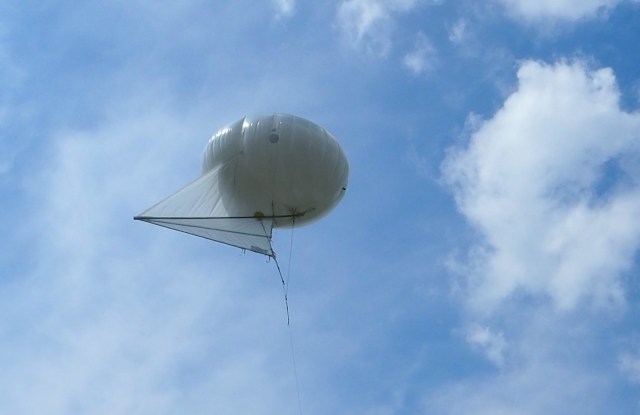
After many months, we launched our helikite today at our campus in Front Royal.  A patented combination of a helium balloon and a kite, the platform was amazing stable in the air stream.  This poor-man’s satellite will be equipped with a powerful digital camera to provide high-resolution imagery of specific areas of interest.  We’re aiming to use the technology to remotely identify and count wildlife on the ground.  In August, we’ll do some live tests of the platform at our research site in the American Prairie Reserve in Montana.  Then, it’s off to various sites globally.  Looking forward to the images we download off the camera tomorrow.

Helikite
A patented combination of a helium balloon and a kite, we are aiming to use this platform to monitor wildlife.

Salamander surveys

Just back from a long night of surveying salamander populations in the Nantahala National Forest with colleagues from the Smithsonian and Appalachian State University.  A really fun night with a great team where surveys started at 10 pm and finished at 3 am.  This study is part of a long-term ecological experiment to assess the effects of timber cuts on salamander communities and has been ongoing since 2009.

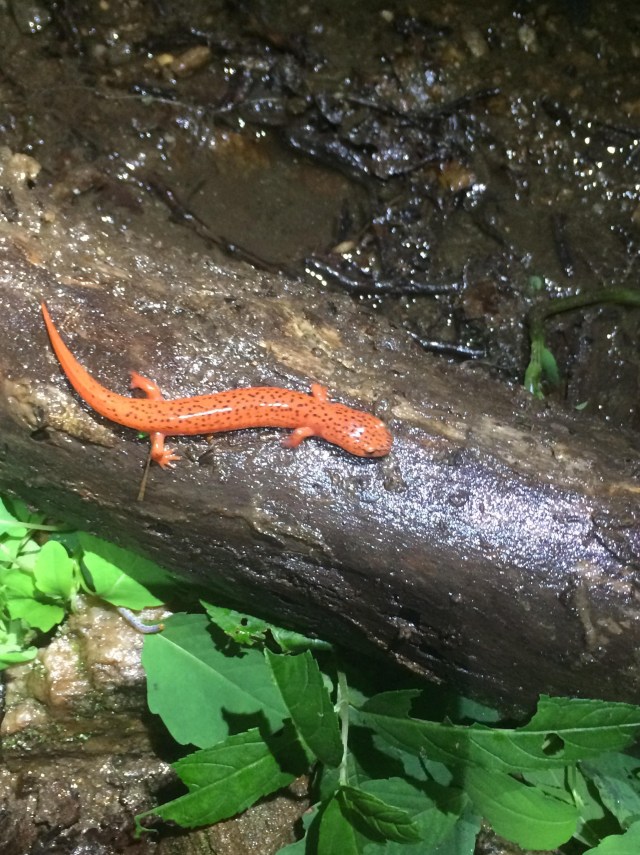
Red Salamander
This red salamander (Pseudotriton ruber) is a species of salamander in the family Plethodontidae. It is endemic to the Eastern United States. Interestingly, red salamanders lack lungs and respire through their skin. Really awesome to find this (not so) little fella.

The first night we counted approximately 300 salamanders throughout 4 different treatment plots, which are arranged throughout the timber cut.  Each salamander is collected and individually marked, so that it can be returned to where it was found.  The markings (mark-recapture) allow researchers to estimate population size.  We caught this red salamander in the picture after we were finished the plot, making a short diversion to an area where they are known to be found.  Great to be working with a team that know so much about the area and the different species to be found!

Smithsonian Sidedoor? …. “Gulp” …. Board of Regents? …. “oh boy”

sidedoor

Ever hear of sidedoor?  Well, if not, it’s a Smithsonian podcast that airs regularly with dynamic content to bring interesting stories to the general public about various Smithsonian units.  Why the “gulp”?  Well, on Monday, I get the opportunity to speak with Tony Cohn and the sidedoor team about the scimitar-horned oryx reintroduction.  It’s a live event that will be taped at the Oprah Winfrey Theater in the National Museum of African American History, as part of the Smithsonian Board of Regents annual strategic meeting.

The Board of Regents is the governing body of the Smithsonian.  It consists of the Chief Justice of the United States, the Vice Presented of the United States, three members of the United States Congress, three members of the United States House of Representatives, and nine prominent citizens.  If you want the full breakdown with bios of this all-star cast, check out this link.  That’s why there’s a second “gulp” …  or rather, an “oh boy”.

Anyway, Monday’s the big day. to highlight the scimitar-horned oryx project and all the people that have worked together to reintroduce it.  The theater is expected to be full, but the taped podcast will be broadcast in the next few weeks.  Tune-in if you’re interested.  There will be a variety of other speakers too, including Drs. Melissa Songer and Suzan Murray.  Melissa will be on stage with me to highlight and educate the board on the recent poaching crisis in Myanmar.

What do you wear to one of these things?  Geesh.
 

Fences a major concern for terrestrial animal migrations

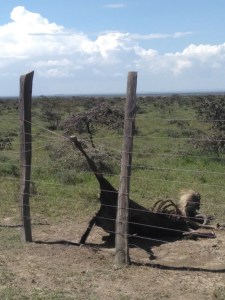
FenceCaught
A terrible way to die.  The hoof of a white-bearded wildebeest, caught in the top rung of a fenceline. Photo credit: G. Hopcraft.

I’ve continued to monitor the trends across the landscapes I studied during my graduate research.  Across the Maasai Mara, fencing has always been a major concern.  But, to see how quickly fencing has expanded across the region is startling.  More and more animals are being recorded as being caught in fences by local partners, tour operators, and tourists themselves.  Just this past week, one of my collaborators took this photograph in the Mara of a dead wildebeest that got caught in a fence.  Others are being reported as starving to death, simply because they have no where to go.

We’re currently working with partners to evaluate the extent of the fence expansion by using the available satellite record.  We then will compare how animals are responding to these barriers by analyzing the GPS data we’ve been collecting.  In doing so, we hope to identify important corridors so that we can work with the local people and keep important areas open to facilitate animal movement.

Elephant poaching increasing in Myanmar

CaptureIn 2014, George Wittemyer and colleagues published an article in PNAS highlighting that the illegal wildlife trade has reached alarming levels, with ~40,000 elephants killed annually for their ivory. These results, however, focused entirely on African elephant populations, with no reference to Asian elephants – the lesser known and perhaps more difficult to study species.

Research being conducted by Smithsonian Conservation Biology Institute (SCBI) scientists, however, is revealing that poaching for Asian elephants could be just as high, if not higher, than their African cousins. These results were revealed from a related GPS collaring study to investigate human-elephant conflict in which 7 of 19 collared elephants (37%) were poached within a year of being fitted with a collar. Concerning is that the elephants are being poached for their skin and meat, rather than their tusks (only male Asian elephants have tusks). This means that entire populations are being targeted (males, females, and their offspring). Removing breeding females and their young from the population is the quickest way to drive a species to extinction, especially given the species’ low reproductive rate. With only a few thousand wild elephants remaining in Myanmar, the data collected by these collars is providing important information to mount a conservation response. Further information on this topic, including a very nice video, can be found on the Smithsonian’s National Zoo website.


Collaring canceled

giraffeGiraffe collaring has been canceled due to a lion researcher that felt he could fit GPS collars on animals without Kenya Wildlife Service approval/permits. I can’t blame KWS for their response, but it unfortunately means that we’ll have to postpone to a later date. Heading back to the US later this evening. What a numpty…..

Arrived Nairobi

downloadEver watch the movie ‘Gravity’?  At the end of the film, Sandra Bullock’s character climbs into the Chinese space station and tumbles back towards earth in a fiery constellation.  Interestingly, at the same time, my flight from Johannesburg to Nairobi experienced some turbulence that made the imagery even more impactful…..like a virtual reality.

Nairobi is quite wet currently, just receiving rain in the last 2 weeks……important considering the state of the livestock and vegetation.  Heading to Laikipia tomorrow to start scouting for giraffe and much needed field work.

Savannah science meeting

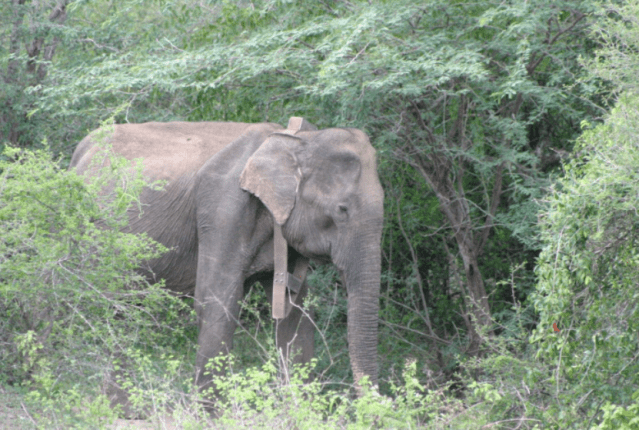
ElephantJust returned from a meeting outside Kruger National Park in South Africa.  Goals of the workshop were to discuss areas for future research, develop ideas for collaboration, and to find ways to better conserve Africa’s ungulates.  Along the way, we encountered this big fella….who didn’t seem to mind our presence.  On to Kenya tomorrow with the hopes of seeing some reticulated giraffe.