Restoring Bison to the Great Plains

Just back from central Montana where I was working with the team from the American Prairie Reserve (APR) to tag bison with solar ear tags across the Sun Prairie management unit.  Amazing trip and an incredible experience to have my hands on bison.  Phenomenal to see these incredible beasts up close.  Very much looking forward to the day when we can finally say that bison are once again wild and free ranging across the Great Plains.

649A0858
Getting ready to tag a young bison with a GPS solar tag.  Photo courtesy: Roshan Patel.

As part of efforts to understand how bison use the landscape, we aim to fit as many bison as possible with GPS solar tags.  All credit goes to Hila Shamon, a post-doctoral research fellow at the Smithsonian Conservation Biology Institute, that has done all the leg work to purchase the tags.

649A0789
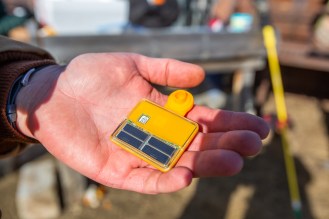
A mOOvement tag, developed to track the whereabouts of cattle.  Photo credit: Roshan Patel

Devices, developed by an Australian manufacturer (mOOvement), weigh about 30g and have been designed to track the whereabouts of cattle.  However, they can also be affixed to the ear of bison.  We have programmed the devices to collect a GPS position every hour.  Over the 4 day capture and handling procedure, we fitted 89 bison with solar ear tags.  An amazing dataset to start investigating collective movement behavior in the herd.

As you can imagine, handling bison is no simple process.  Animals must first be rounded up so that they can quickly and safely be processed.  Similar to how ranchers handle cattle, bison are pushed through a chute system.  We collected blood for disease testing and in some cases, a fecal sample.  Many thanks to the professionalism of the staff at APR.  No major injuries to man or beast throughout the week.
DJI_0103

An aerial perspective of the capture facility. Photo courtesy: Roshan Patel

Long-term Herbivore Changes Across a Kenyan Grassland

Congratulations to Ramiro Crego and colleagues for their recent publication in Biological Conservation to describe long-term changes in herbivore occupancy and richness across the Laikipia plateau in central Kenya.  The analyses incorporates 15 years of aerial survey data, collected by Kenya’s Department of Resource Surveys and Remote Sensing (DRSRS), and highlights the importance of accounting for imperfect detection in results.  As expected, ‘wildlife friendly’ properties had the highest levels of species richness.  High variability in estimates, however, suggests that some pastoral properties also support rich herbivore communities.  Some very interesting results that we hope will be influential in spatial planning across the region.  Thanks to all our co-authors on this effort.
SpRichnessLaikipia

Reintroducing One of the Rarest Antelopes on Earth

Addax are shy, cautious animals that reside in some of the harshest habitats on the planet.  A desert specialist, addax once ranged broadly across the Sahara from Morocco in the west to Egypt and the Nile Valley in the east.  Today, addax are one of the rarest antelopes on the planet, with less than 100 individuals remaining in the wild, persecuted for their hides and meat.

pa120185
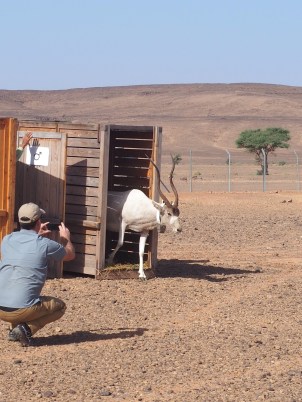
An adult addax, fitted with a GPS collar and ready to be reintroduced back into the wild.
pa120180
One small step towards repopulating the former habitat range of the species.

With foresight from the Moroccan government and support from the Sahara Conversation Fund, Wild Africa Conservation, and the Smithsonian Conservation Biology Institute, we have initiated an exciting reintroduction project in Morocco.  In late 2019, we reintroduced 20 addax to a remote area of the Sahara desert.  To facilitate long-term monitoring, 10 animals were fitted with GPS collars.  We will continue to monitor each animal with our Moroccan partners over the next few years, providing information on the movements of each animal and a measure of reintroduction success.  Looking forward to continued efforts with this team to restore this species to the wild.


Population Structure and Spatial Ecology of Kordofan Giraffe

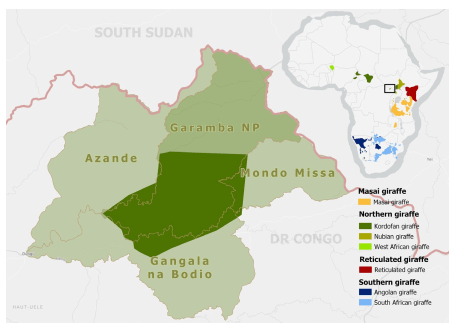
Congratulations to Matthias D’haen and colleagues for their new publication, published in the most recent edition of Ecology & Evolution, to highlight the rapidly declining population of Kordofan giraffe (Giraffa camelopardalis antiquorum) across the Garamba complex in the Democratic Republic of Congo, one of the last remaining populations of the species in the wild.  Estimated at 45 individuals throughout the Garamba complex, populations of Kordofan giraffe have declined by more than 85% over the last three decades.

This research focuses on the isolated, easternmost population of the species, providing an assessment of changes in the population over time based on aerial surveys, the spatial distribution, and home range. Looking forward to next steps!

Kardofan
Location of Garamba National Park and adjacent Hunting Reserves, Democratic Republic of Congo.  Figure also shows the range map of all giraffe (sub)species.  Source: Giraffe Conservation Foundation.

Understanding the Spatial Requirements of Reticulated Giraffe

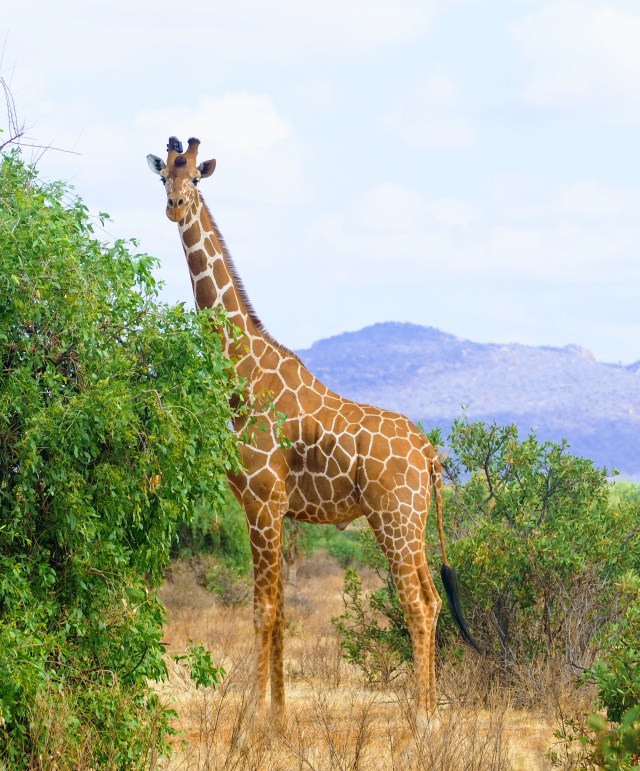
Excited about the progress made this week with partners Giraffe Conservation Foundation, San Diego Zoo Global, and the Kenya Wildlife Service, to fit 25-30 reticulated giraffe with satellite transmitters.  So far, we have fitted 12 tracking devices on animals across Laikipia and Samburu counties in northern Kenya, with no injuries to report.  All animals got back on their feet quickly after being processed by the team.  Across this region, less than 5% of the habitat of this species is formally protected, with reticulated giraffe declining by about 50% over the past 30 years.  We hope to collect many years of data on the movements of these individuals, providing the basis for an improved scientific understanding of the species’ habitat requirements that will hopefully be used to inform policy across the region.

The team is now headed further north to capture the remaining animals, requiring the use of a helicopter to efficiently find and tag individuals.  Immense landscapes up here.  Looking forward to seeing the data we’re receiving and further engagement with the team.  Seeing these giraffe face to face has been truly amazing!  Can’t wait for next steps.

OLYMPUS DIGITAL CAMERA
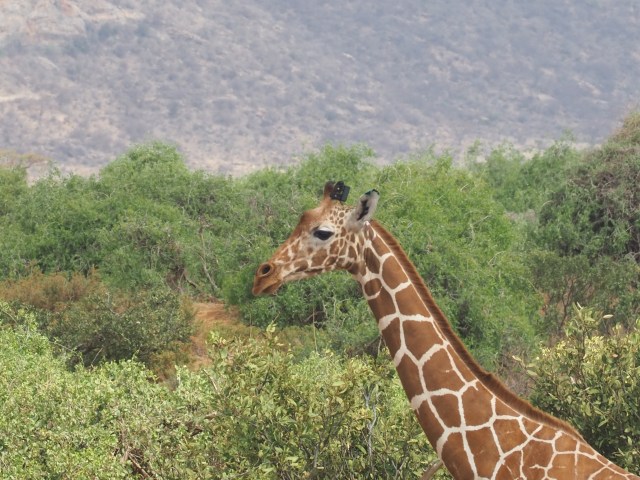
An adult reticulated giraffe, fitted with a satellite tracking device on its ossicone and providing near real-time information on its movements on an hourly temporal interval.


Gearing Up for Giraffe Collaring

After over a year delay, its nearly time to return to Kenya with partners from the Giraffe Conservation Foundation, San Diego Zoo Global, and Kenya Wildlife Service to fit 25-30 reticulated giraffe with solar powered GPS transmitters. We’ll be working across the Laikipia Plateau to increase our sample size from n = 11 individuals and provide a better understanding of the space use and movements of these endangered animals.  Along our way, we will be accompanied by Ed Yong, author of “I Contain Multitudes: The Microbes Within Us and a Grander View of Life” and journalist at The Atlantic, to increase awareness of the plight of giraffes and the complexities to conserving them.  Should be an exciting two weeks.

Very much looking forward to moving this initiative forward and hopeful to have many pictures to share.

OLYMPUS DIGITAL CAMERA
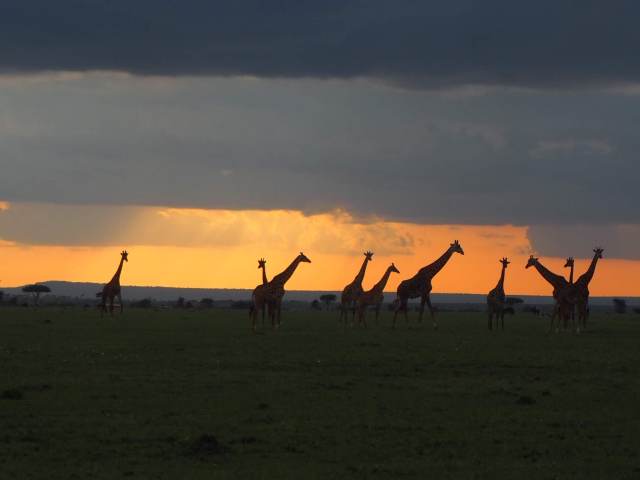
A TOWER of giraffe!  No, for real, that’s the proper term for a group of giraffes.

Counting large mammals from drones

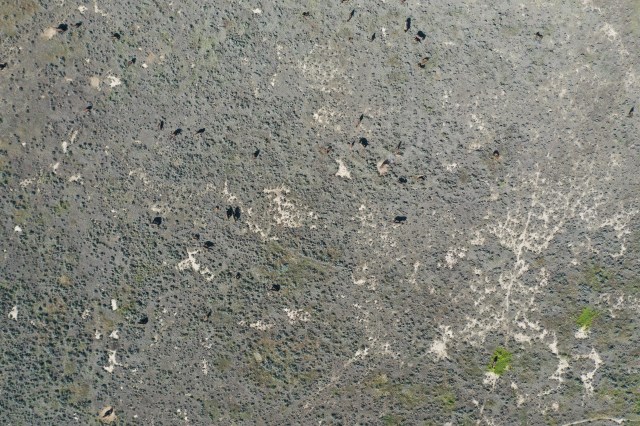
Ever wonder what a bison looks like from 100 meters altitude?  This image was taken from a DJI drone during field activities at the American Prairie Reserve in Montana last month, part of ongoing efforts to develop automatic tools to accurately count large mammals.  Beyond a total count, we’re also interested in quantifying the total number of calves, juveniles, and adults in each image, something that is extremely useful to monitor population growth.  If you look closely, you can see the calves, which have an orange tint, are smaller than the other animals in the image, and often found next to their mothers.  Much harder is differentiating sex in the juveniles.  Some of the large males, however, are relatively easy to identify and there are a few big boys in the image.  One of these large males can be seen “wallowing” near the center of the image, a characteristic of bison and how they re-shape the ecosystem, providing improved habitat for a variety of other species.

I count 46 individuals in this image, inclusive of 6 calves.  We’ll see if the computer agrees!

default
Image collected from a DJI Mavic Pro 2 at 100 meters across the Sun Prairie management unit in the American Prairie Reserve, Montana.

Geographic range of giraffe updated

Congratulations to David O’Connor and colleagues for their recent publication in Mammal Review which updates the known distribution of giraffe species across the African continent.  Lot’s of changes due to improved data that will ultimately help to inform and target conservation efforts.  Looking forward to next steps with San Diego Zoo Global and the Giraffe Conservation Foundation as we gear up to collar 25 reticulated giraffe across the northern rangelands in Kenya.

GiraffeRange
Updated geographic range maps for giraffe in sub‐Saharan Africa. Ranges are shown as filled coloured polygons for each species. The dashed outlines show the previously recognised IUCN range for each taxon (Giraffe Conservation Foundation 2016, Muller et al. 2018). The cross‐hatched areas are where giraffe populations are not confirmed, but possibly do occur. Figure from O’Connor et al. 2019.


Integrating animal movement data into conservation decision making

Just back from a workshop in Tanzania, working with colleagues from the University of Glasgow to integrate animal movement data into assessments of the likely effects of infrastructure development projects on wildlife. There is concern across many regions in Africa where these projects are occurring, although little engagement with the scientific community in how data can be incorporated into development plans. The meeting was attended by individuals from 8 different African nations, with data on the movements of elephant, wildebeest, giraffe, zebra, wild dog, kob, Tiang, and lion.

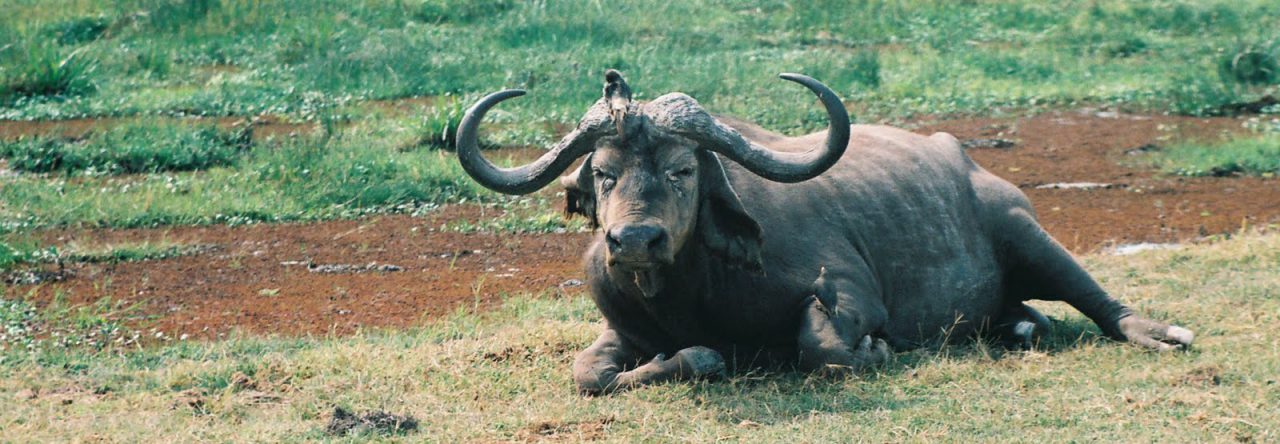
Buffalo
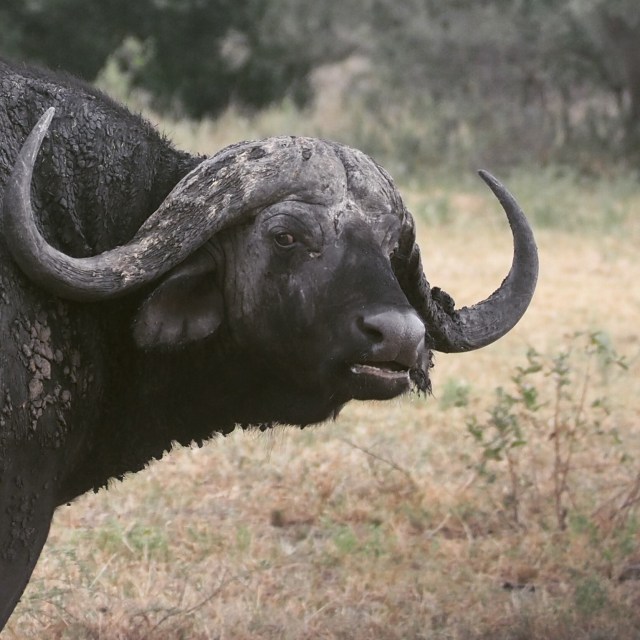
Check out this big old fella, giving me the stink eye!

Along the way, we also got to see loads of wildlife in Tarangire National Park, near where our workshop at the Ecoscience Center was hosted. The rains were yet to arrive, so wildlife was concentrated in the park, providing some amazing wildlife viewing opportunities. Lot’s of elephants and zebra…even a few wildebeest, buffalo, and lion!

Railway underpass extends migration distance in Tibetan antelope

Animal crossings are designed to mitigate barrier effects of transportation infrastructure on wildlife movement.  However, many crossings are not placed in optimal locations and may not take into account the animals’ natural movement patterns.  Our study, published in PLOS One, calculates the additional distance that Tibetan antelope must travel in order to move across an ecosystem that has been bisected by a railway.  Our study suggests that the crossing location can prolong the migration distance of these antelope by >80 km. To better conserve long-distance migration, we advocate for the need for long-term studies to assess wildlife movement prior to the establishment of these anthropogenic barriers.

Capture2
Graphs shows the distance between modeled migration routes and satellite derived locations of Tibetan antelope.